Thursday, 26 April 2012

Small Things Of God....

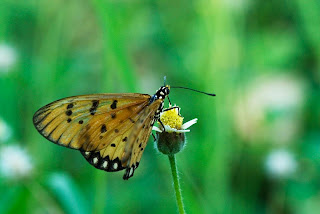
 It is fascinating to observe that, how big beauties exist in relatively small, sometime even tiny forms in nature. The beauty attracted me so much and created such enthusiasm in me, that I borrowed my friend's 105mm Macro lens  and wander around the fast disappearing  green, wild bushes of Kolkata to capture life. Small, beautiful lives, either we simply overlook or kill with a blow of rolled magazine with our utmost annoyance. Here are some moments that I saw through that 105 Macro...


Tuesday, 17 April 2012

Wrestle to Survive


After 500 push-ups, 600 sit-ups and a workout with the Gada (Indian club) it is time to face his disciples at the akhara (ring of wrestling). After two hours of tireless kushti (wrestling) with his students, Pal Babu gets a soothing massage from his disciples. Mahendar Pandit (48 years), alias Pal Babu, adopted this routine only for last 10 years at the Shree ‘Swami Gyan Yoganand Parimath’ at 126 Cotton Street, which has been a wrestling venue for the last 95 years. The ashram is at the end of a dark, narrow lane near Burrabazar in Kolkata, India. Those who enter the lane have no idea what is coming at the end of the damp and dark alley. However, it surely gives a feeling of nostalgia, as hundred-year-old buildings stand side by side forming those very narrow lanes. This feeling intensifies as one enters the ashram, where the disciples of the late Swami Gyan Yoganand, the founder of the ashram, run a full-fledged akhara.

Unfortunately, akharas face the risk of extinction today. “Most teenagers in the city, who are conscious about their physique, prefer a modern gymnasium to an akhara,” says Manoj Sonkar, one of the present gurus of the ashram, “and those who come to learn are constrained by their economic conditions to learn it properly”. Any physical exercise needs proper diet that these students can hardly afford. “For Pahalwani milk is essential, which many of the disciples cannot buy,” says Mahendar Pandit, one of the present gurus of the ashram who works in a Papad (Indian flat crispy bread) factory for a living.

The scenario was not like this even 40 years back, when akharas used to be the only place for bodybuilding. With the advent of hi-tech gyms and various steroid-stuffed capsules, the akharas have lost their former glory and importance. “When I first came here 10 years ago, this akhara used to be full of people from Bihar or UP who had migrated to Kolkata for their living. But nowadays the number of these migrants has reduced,” says Pandit. Echoing Pandit’s feelings Ashok Kumar Agarwal, the 65-year-old trustee of the Ashram says, “I used to come here in my childhood. At that time, I still remember, the place used to be chock-a-block with people, but as time passed the crowd became thinner.” However, the akhara has managed to survive with more than 30 devoted members. In return for their commitment to the ashram, they receive lessons on wrestling from their gurus.

Mahendar Pandit, Manoj Sonkar and Suresh Yadav are the gurus who work tirelessly to keep alive this ancient art and tradition of self-defence. “Whoever comes to learn kushti in the ashram is trained for toughness with the help of various exercises. Once we are satisfied with his physical strength, we start teaching them different techniques of Pahalwani,” says Pandit. Achieving physical strength is the biggest challenge for every student. “We still do physical exercise every day like free-hand exercises and weightlifting and only after that we practice wrestling in the akhara,” says Sonkar. He further adds, “The flexibility and fitness that one acquires from a session at the akhara are extremely long lasting compared to a gym. You do not lose or gain weight after quitting kushti”.
 
The levels of physical strength and fitness that can be achieved from kushti were visible when 27-year-old Vickey Pataniya started working out by swinging a couple of 20-kilo Gadas in two hands. A regular at the akhara for the last 10 years, Vicky with his robust chest and huge muscular body recalls, “I used to be very thin and weak in school, and students from senior classes used to bully me a lot. That was the reason I joined kushti at first, but as time passed I gained much physical strength and slowly fell in love with the art”. Another student of the ashram, 17-year-old Vijay Yadav, has just completed training and started learning techniques of wrestling.

Pahalwani is not only about bodybuilding or a muscular body to impress the opposite gender, but also about being equipped for self-defence. “The various techniques of kushti are specially created for fighting in the battlefield. Rajas and Maharajas used to learn these in their times,” says Suresh Yadav. Techniques like Dhak, Nikas, Dhobi Pachad or Kanpheri are specially designed to defeat the opponent in freehand combat. “Like Kanpheri, which happens to be Pal Babu’s speciality, is about pulling the opponent by holding his neck, while he automatically pulls himself back, and then giving him a sudden push that he falls on his back,” says Pal Babu by rubbing his face with the specially made clay of the akhara.

“The clay is made by mixing various ingredients like sandal dust, Multani Mitti (Fuller’s Earth), Neem leaf, Mustard oil, various flower petals and clay from the Ganges. These help to fight back various skin diseases,” says Pal Babu. “You see, Pahalwani is not only for physical health but for mental health as well. It needs strong will power and an attitude to give up many worldly pleasures; for that a Pahalwan should avoid the company of a woman, and that is the only way to learn the core of Pahalwani and Sanskriti (culture),” adds Pal Babu.


When asked about the sanskriti, Manoj Sonkar points towards an old man, clad in a red dhoti, sweeping the ashram premises with the utmost concentration. “His name is Dhonilal Sonkar and he is 75-years- old. He has achieved everything in his life a common man can dream of, yet he comes here every day to sweep the floor. It is not his devotion to God but a habit of many years that drives him to perform this chore. It has become a part of his culture that tells him that sweeping the floor is his duty. He has been doing this for years ever since he started practice in the akhara. The culture of Pahalwani taught him the virtues of hard work and devotion”.

Sunday, 15 April 2012

Freedom Movement


Alokananda Roy performing with Nigel Akkara
"Ever since Ma came into my life, I have been a changed person," says Sanjoy Patra, 37, an ex inmate of Presidency Jail, Kolkata. Patra is referring to Odissi dancer Alokananda Roy, who has been regularly visiting jails in West Bengal, helping the prisoners to freely express their minds and bodies through dance.
The danseuse and her students call it dance therapy. And therapeutic it is. "It has been an exercise in self-realization," explains Patra. "It gave us the strength to believe in ourselves, to realize the happiness of living in the present." Not surprisingly, the prisoners who have partaken of Roy’s lessons refer to her as "Ma".
Roy visited the Presidency Jail l for the first time on 8 March, 2007, on an invitation to celebrate International Women’s Day with the female prisoners. "I still remember as if it were yesterday,” smiles Roy. “They presented a dance recital for us, and with their make-up and costumes, they seemed just like the students in my regular classes."
Roy wanted to do something for them. Her wish turned into reality when Banshidhar Sharma, IG (Correctional Services), approached her in this regard. Besides her dance school, Chandanaloke, Roy also runs an NGO called Inspiration Foundation, a centre of performing arts for underprivileged youth.
The dancer reveals how her very first visit to the Presidency Jail changed her idea about a jail. Contrary to what she expected, the place presented a clean and tranquil environment. The warmth of the inmates touched her. Seeing young male prisoners "walking aimlessly", she thought "one of them could very well have been by own son". And that’s how she conceived of dance therapy for them.
Convincing the male prisoners, however, was not an easy task. "Initially, we were wary. I thought ‘who is this crazy woman trying to teach us dance?’” recalls Nigel Akkara, who served nine years as an under trial for 18 cases of murder, extortion and kidnapping. "To be honest, I did not like her.”
So at first, there were only 10 students who went to Roy’s class, much against their wishes. "But slowly, they began to open up. And soon, we had more than 40 inmates in our class," says Roy.
"They had their doubts, but Mrs Roy’s love and affection overcame such obstacles,” says Sharma. Of course, it took time. “When I came to know that a lady has come to teach us dance, I thought it was gimmick of another of those fame-hungry social workers, to whom we were actually untouchables. And when they asked me to sign up for the class, I told Ma that gundas do not wear ghungroos,” laughs Akkara. “But my outlook changed when I saw her interact with the prisoners, touching them while teaching as if they were like any other.”
Roy now takes classes separately for men and women, at least three times a week. "The segregation between the genders is very strict. Male and female prisoners are not allowed to interact in the jail," she explains.
Initially, Roy didn’t have any huge plans, such as of trying to integrate them into the mainstream of society. Her classes were more like constructive recreation. Little did she imagine that her instruction would gradually become the road to peace for the troubled souls. "We are born with rhythm and beat; a life without these would lead to destruction. By interacting with these men and women, I realized that somehow they had lost the rhythm of life, and that perhaps it could be re-established through music and dance,” reasons Roy.
Jail in the Indian context entails indescribable mental agony. About 70 per cent of the inmates are just awaiting trial. “That means you are putting a person behind bars without knowing if he or she is guilty,” says Sharma. In order to transform them, they should be engaged in some kind of constructive activity, believes the jail authority. And what could be better than music and dance?
The dance classes worked wonders for the prisoners of Alipore Central Jail. Besides putting up small shows within the premises, they were invited to participate in the Uday Shankar Dance Festival 2007 at the prestigious Ravindra Sadan auditorium. "It was perhaps for the first time in the world that prisoners came out in the open and presented such a recital. They performed so well that the audience gave a standing ovation and, overwhelmed, most of the prisoners ended up in tears," recalls the force behind all this.
After this, there was no looking back. In the last five years, they have done more than 35 shows all over the country. And the revenue generated from these events is donated to the West Bengal Prisoners Welfare Fund. The inmates not only chose a completely different way of life, but also became devoted music lovers, says Sharma happily.
What is of utmost importance is that none of those people, who underwent dance therapy, have committed any crime. “And they never will,” adds Sharma in a matter-of-fact tone. Sharma says that he is not merely hypothesizing, and that it’s his conviction based on his entire career as a prison authority.
Roy too feels strongly about it. "They wouldn’t do anything that would embarrass me. Many times they had opportunities to flee, but none did so,” she says.
Roy’s devotion and hard work paid her rich dividends too. Within a few days of her classes, she became “Ma’ from “Madam”. "I cannot describe in words what have I gained from them. Their unconditional love cannot be compared with any treasure in this world,” she says, her eyes moistening.
So strong became the bonding that the teacher couldn’t afford to miss a class. If she did, she had to face grumpy faces the next day! On her part, she played the role of a mother, full of affection but also scolding them whenever necessary. “If they made mistakes deliberately, missed a class or were lazy, I would tell them off,” Roy smiles.
Thanks to her guidance, the prisoners turned into veritable stars. Their first performance of “Balmiki Prativa” outside the wall in 2007 was not only a huge success, but also a life-changing experience for them. "After the show, most of them were crying, as if they were reborn,” says Roy.
Sanjoy Patra sums it all up. "We have realized that the only thing that overcomes hard luck is hard work and love for others. If Ma had come into my life earlier, it would have been a completely different story."

Wednesday, 14 December 2011

The Girl who Broke the Masculine wall Of Fire


Julia Singh


In the early hours of December 9 th 2011 the killer inferno snuffed out nearly 100 livesthe of posh AMRI Hospital . Most of the victims were patients, some of them immobile in Intensive Care Units.  At 11th December, Sunday many Kolkatans went to of the burnt hospital building with candles in their hand to show respect to the dead and also to protest against the corrupt health sector of the state of West Bengal. Many more deaths could have occurred, many more candles would have lit, if the youths at Panchanantala slum, just behind the hospital, didn't jump into the fray to rescue stranded patients in the chamber of death. The ‘untrained’ rescuers scaled walls, climbed pipes and bamboo scaffolding without thinking anything about their own safety, at a moment when the hospital staff failed to respond, leaving the patients to succumb to death. They shattered the glass panes of the blazing building and saved over 70 lives. A few of these saviours are fighting for their lives when I am writing this.

Being a journalist I too went to the burnt hospital and to the slum of Panchanantala to gather news for our news portal, where I happened to meet a young woman named Julia Singh who was the only girl among the saviours. The slum’s champion ‘tomboy’ Julia –she’s a regular member of football and cricket games—worked hand in hand with men and boys in the blaze to rescue patients. The 21 year old Julia owns a small cigarette shop at the slum, whose father Babu Singh is taxi driver. This story will always be one of my favorites; not only I cracked it first, and it became an ‘exclusive’ but for the opportunity to meet Julia. who refused to be ' Just another girl to get married'.

 AMRI, being one of the most expensive health care system in Kolkata, has always refused to admit any patient from the slum for obvious monetary reasons. And for that, the hospital has always been a target of hatred for the slum people. But when disaster broke out, these slum people acted with utmost bravery rather than the loyal staffs of the hospital. I have no answer for this peculiar behavior though…

 with other boys of the slum Julia too entered the building that night with the hope of saving few lives as she happens to be a trained disaster management personnel who attended a course offered by The State Government one year ago. Probably she was the only rescuer among the slum-dwellers with a proper training. Here's a blow-by-blow account of brave Julia:


1.30 AM: I and my sister, Papia Singh, had just gone to sleep after finishing the day’s work. For some reason the halogens of AMRI compound was turned off and I was quiet happy for that. The bright light always disrupts my sleep. It pierces through the tiny holes of our closed door. But suddenly I felt something wrong; smell of something burning woke me up. Initially I thought somebody burning tyres and junk, but then I heard a commotion and screams. Then, someone started knocking on the door frenetically and shouting, 'Fire...fire'. As soon as I came out I found the whole slum engulfed in smoke.
The Hole In The wall She dug

1.45 AM: Then we noticed everyone running towards the front side of AMRI Hospital’s Annex Building. I felt a sudden relief that it wasn’t my dukan (her cigarette shop). Amidst the pandemonium I decided to follow the crowd towards the main gate of the hospital, but found it locked from inside. Thick black smoke engulfed the building and made us cough and choke.

2.00 AM: I along with my sister and a few local boys ran to the back side of the building. But the wall (almost 15 feet high) and the barbwire was too high to be scaled. While standing helplessly under the long wall, we heard a shrill cry of a child and someone wailing. Something terrible was going on inside the dark building.

2.15 AM: We decided to dig a hole at the bottom of the wall. Papia got hold of a shovel and we took iron rods or whatever we could lay hands on, to dig a hole big enough for us to get inside the hospital compound.

2.30 AM: It was completely dark inside. The first thing we noticed amidst the choking fume on the upper floors were tiny dots of lights moving frantically across the dark glass panes. We were puzzled. We had to reach there, but how? Sooty fumes were coming out from the gaps of big basement door and the scorching smoke burnt our eyes and nose. We needed a ladder, or at least a rope to reach the upper floors. Then Nitai spotted a bamboo ladder, part of the scaffold used by painters employed by the hospital. As I climbed up near the darkened glass pane we spotted the patients in hospital clothes; what appeared tiny dots of light were screens of mobile phones. The patients were using these as signals to attract our attention! We didn't notice any staff; and there were no lights. The darkness and the billowing fumes made our job nearly impossible.

3:00 AM: We decided to break the window panes first. But those were so thick. Then I asked Papia

3:30 AM: But I knew there were more patients waiting to be rescued. There was so much soot in the air that I took a curtain to cover my face. Then I ran towards a patient standing like a ghost in his white hospital robes. He was acting like a living puppet as I held his hand tight and pulled him towards me. He seemed to obey me like a child, as I guided him towards the broken window. He was safe at last.

3.35 AM: Suddenly I remembered about the crying child. Even amidst the hellish clamour, the sound of the shrill cry was ringing in my ear. But for that I had to go to the balcony, opening the door. Once again I went to the window and took a deep gulp of air. I had to save the child! As I stepped into the balcony, I found darkness and fumes. It was difficult to see. Then I heard the cry again. I heard other voices too. I followed the sound blindly and saw three shadowy figures of children at the far side of the balcony. But I could not spot the children when I went there.

The Way She Tried to Climb the at First 
4.05 AM: Then I could hear loud shouts and sound of breaking glasses from various rooms. “May be help is coming,” I thought. “May be more people from my slum have entered the building… but where are those children have gone?” Thick smoke almost blinded me and my cheeks were burning in the scorching heat.

4.30 AM: I took the stairs looking for those children, and for the first time I spotted some men in uniform. The firefighters have arrived at last! They were trying to rescue patients along with some local youths. One of them spotted me and asked me to get out of the building. But I had to find the children! Then I saw an old woman climbing down the stairs, blood dripping from her injured head. The sight reminded me of a personal tragedy. A couple of years ago, once my mother fell in the toilet and injured her skull badly. We’d rushed her to AMRI Hospitals, only to be turned away just because we were poor people from the slum. We had to take her to a government hospital four kilometres away from our house. The memory slowed my pace. Suddenly a man in uniform grabbed my hand and ordered me get out.

5.15 AM: I was feeling drowsy and asphyxiated. The fumes had got into my lungs. I was causing a heavy breathing problem. I couldn’t climb down the stairs to go outside. I needed some fresh air immediately. I ran towards the room where we’d first entered, where my friends were waiting but couldn’t find it in the smoke. It seemed that I have lost the way to the room among numerous balconies and the rooms of the big building. Finally I spotted a room with glass panes broken. I rushed to the window and took a big gulp of fresh air. I had to get down. I grabbed the curtain and some bed sheet, knotted them together to make a rope out of it. I remembered the lessons learnt during the 17- day Civil Defense class I’d attended last year. We were taught how to make strong knots, how to enter a burning building and rescue the victims. But I never thought I could put my training to use in such a circumstance.

6.00 AM: Finally I touched the ground climbing down the rope. Some of my neighbours were standing there. I leaned on them for support. My entire body was aching, my face was burning, my eyes inflamed. I thought I was choking to death…suddenly everything turned dark.

9.00 AM: I found myself lying on my bed. Slowly I regained conscious and remembered everything in a flash. I recalled the dark smoke-filled interiors of the hospital, the cry, the patients…. My hands were aching, there were deep cuts and I needed medicine. Yet I rushed back to the hospital’s main gate. The scenario was completely different. It was chock-a-block with thousands of people. At least 50 fire brigade engines were there. Police, firemen, TV cameras, journalists, VIPs so many people. And a lot of them were interviewing my friends at our slum. Our slum became the centre of attraction for the world! But the cloud of smoke still engulfed the hospital was still there. Now no one will need us there in the rich man’s hospital. We are unwanted inside the towering glasses. Standing alone in the crowd, tears rolled down my face. I was happy that I helped the hospital that refused to admit my mother just because we were poor. But there’s a regret, because I couldn’t rescue those children…


The children Julia failed to rescue couldn’t be traced. The government authorities however countered that there were no such children in the annexe building of the hospital. Meanwhile the state government decided to felicitate 36 rescuers from the Panchanantala slums. But Julia’s name is not in the list, for some ‘mysterious’ reason. “Julia’s father has affiliation with the ‘wrong’ political party,” said a senior resident from the slum on condition of anonymity. 

Wednesday, 21 September 2011

Bahurupi: One Art, Varied Faces


one of the faces
You are at Poush Mela in Shantiniketan, wandering amongst the crowd, the winter sun on your back. You happen to glance right and find Lord Krishna – blue skinned, yellow robed and peacock feather in hair – walking alongside. Or maybe Shiva, fully attired in tiger skin, snake around neck and trident in hand. You smile and walk on, your feet scarcely pausing on the red earth. The "Bahurupi" too carries on and is soon lost in the crowd. It's not an uncommon sight in Shantiniketan at that time.
Bhola Maiti, a 40 years old Tarakeshwar based Bahurupi wakes up every day before sunrise and after taking his makeup and disguise he sets out by 6 o clock. Bhola is working as a Bahurupi for 6 years now. First he roams around the Tarakeshwar temple posing in front of the people, and then goes to nearby towns like Konnagar and Sreerampur. "This is my family tradition and I must continue this. My grandfather took up the profession more than a century ago in British period, and my father too followed him," said Maiti.
Bahurupis have been an integral part of Bengal's rich and vibrant folk culture for more than 200 years now. In literature too, there are numerous examples – Sreenath Bahurupi of Sarat Chandra Chattopadhyay being among the first that come to mind. "Today's Bahurupi is the result of evolution of Alkat Nach (Alkat dance- a folk dance of primitive Bengal) No wonder, Bengal's culture is moved by this form of art," says Mr. Sarbananda Chaudhuri, a research scholar at Ramakrishna Mission Institute of Culture, Golpark and Reader of Bengali department of Netaji Nagar College. Mythological characters from the Ramayana, Mahabharata and so on were brought to life by folk artistes in this manner, especially during fairs and festivals.
Bhola Maity
Kaach Nritya (Kaach Dance) is another primeval Bengali folk art; Kaach Nritya literally means 'Dance in disguise'. Small acts, ornamented with dance and song was the sole of this art form, and to make the mythological characters livelier, Kaach artists used various makeups and disguises. Like Bhola says "My ancestors used to perform in groups. They used to dance as well, as dance and acting was an integral part of this art. Now we perform individually."
The term Bahurupi is derived from Sanskrit, "bahu" meaning many and "rupi' meaning form. Through make-up and disguise, folk artistes assumed the forms of several hundred characters, ranging from demons to gods, doctors to holy men, and sometimes even animals. There was a time when Bahurupis used to go from door to door to reach out to people. And in lieu of their act, would be given gifts of food and clothes by the households. This wasn't charity or aid, but gifts in the strict sense of the term, given with great honour by the mistress of the house.
At times, the Bahurupis would also perform, by means of singing, dancing and acting. The acts were meant to entertain, educate and inform the audiences. The artistes took up stories from the Ramayana and Mahabharata, folktales of gods and goddesses, or even concocted tales of animals and birds. Now melas (fairs) are the place they earn their money from. "Durga Puja is the most important season for the people in our profession", commented Bhola.
Now with the arrival of various other forms of entertainment these forms of folk arts are losing the limelight. Modern culture and technological advancement have brought them tough competition.
Bhola- in his Disguise
Poverty, illiteracy are also the reason for vanishing these art forms. But, hope is always present even in the darkest abyss. Shibu Mandal, Bhola's guru (teacher) with his 25 disciples is not only proving the purity of the statement but also saving this art form from dying. "I learned this art from my ancestors but to learn any art you need a proper guru; Shibu Da has acted that part in my life", said Bhola. Ignoring every obstacle on their path people like Bhola and Shibu are fighting to death to preserve this vibrant art form. "I am very poor and what I earn is not enough for my family. I could have worked as a Grade-D worker, to earn more. But in my present profession I earn more honour than any other would have allowed", said Bhola with genuine pride in his voice.

Tuesday, 20 September 2011

Burdens turned into social assets: A Silent Touch


Bells, balls, stars made of paper pulp for Christmas
Tools and hammers lay scattered on the floor of the workshop. An annoying clang of metal and monotonous groan of chainsaws fill the air. Two artisans are engrossed in work, notwithstanding the deafening din. Their trance gets broken only when we step in. They greet us with a smile and communicate in sign language. Welcome to the silent realm of 'Silence'- an NGO for Deaf and Mutes.
Subrata Majumder, Sharmila Bhattacharya and Samir Ray—three administrative workers of the organisation take us to the conference room away from the din. Ray narrates the origin and evolution of Silence.

He says, "It all began in 1975 when I was working at Geological Survey of India located beside the Indian Museum near Chowringhee. My nephew, a verbally challenged boy, had been studying in Government Art College, close to my office. He'd often drop in to meet me at the office along with a friend called Amal Bera, another mute artist of the college." Bera had formed an interesting group with other mute artists at his college. The strange group of talented young artists used to craft beautiful greetings cards as well as other artefacts. One day Ray happened to see those and was quite impressed by their artistry.
silence made candles
An enthused Bera requested Samir Ray to help them sell the artefacts. Then Ray requested one of his friends, Sujay Sreemal, a successful businessman to take over the project. "They were excellent artists but they'd no sense of marketing", reminisced Ray. As soon as Sreemal lent his marketing acumen multinational companies like ITC and Union Carbide started buying the artefacts in bulk. Since the companies had a policy not pay the artists individually they were asked to form an entity or organisation. They named themselves 'Silence' and were able to open a commercial bank account. Thus 'Silence' was born on April 11, 1979.
In 1981, Samir Ray left the job at Geological Survey and joined 'Silence' as a full-time worker. "In those days I was paid a monthly salary of Rs500," said Ray. Now Silence has its handicraft shop at the porch of Dakshinapan market in southern Kolkata. They showcase their products such as greeting cards, scented candles. Now, after three decades the organisation earns nearly Rs 2 crore per year. "After keeping aside 10 per cent of the income for administrative purpose, we distribute the rest among the members of our organization", said Sharmila Bhattacharya. "Silence, is perhaps the only NGO in Kolkata, whose actual mission is to include the deaf-mute in the mainstream of the society; we don't want them to live out of charity". Today, various products made by these people, are exported all over the world. Now they also make furniture, jewellery and other mementos which are sold at a premium price. "Since packaging and designing is an important aspect of marketing, we have opened a separate packaging division", added Bhattyacharya.
The sound of a ringing bell broke our discussion in the conference room. It was lunchtime at the Silence workshop. We could hear footsteps moving towards the cafetaria at the top floor. "It's lunch hour; we provide our students and workers a free meal", said Subroto Majumder. At the top floor, workers of started queuing in front of the food stall. The simple food, consisting of rice, dal (lentil soup) and vegetable curry were collected by the workers on their plates. The simple and fresh food was relished by these workers.
workers of Silence
"Unknowingly, what many people buy from various gift shops in Kolkata at a steep price is manufactured by these silent workers", added Chanchal Sengupta, coordinator of 'Silence' at the lunch table. "First we train them to perform various works like making candles, graphic designing, carpentry or jewellery making. After that we employ them in the production unit," he says. According to him, as their world of the deaf mute is devoid of sound, the ability to concentrate is better than 'normal' people. "They are good at doing repetitive work, and actually are more skilful than able-bodied workers", said Samir Ray. This is why what they produce through hard work is usually flawless. That Ray was not exaggerating became evident when we visited the 'product exhibition' room. The white, dull walls were reflecting bright vibrant colours of various beautiful creations. Candles, cards, Christmas trees, jewellery and other showpieces created the ambience of Christmas.
'Silence' exports these good all over the world. International buyers are very strict about quality, and even a tiny error can lead to the cancellation of a whole shipment. Hence we have to be doubly cautious while working on the export-quality goods", said Sengupta. No one ever expected that these people can work and sustain themselves. They were treated like burden in the society. But Silence has turned these 80 people from burden to assets of the society.